




"In one of our concert grand pianos, 243 taut strings exert a pull of 40,000 pounds on an iron frame. It is proof that out of great tension may come great harmony." Theodore E. Steinway

By Leslie Mulligan
No stranger to success in negotiations, Oprah Winfrey has once again made both parties a winner. She and Weight Watchers have joined forces to help the rest of us achieve health and happiness. Their arrangement is based on one of the most fundamental negotiation principals: when the parties' interests are aligned, more value can be created.
Oprah made a major investment in Weight Watchers, announcing a $43 million investment, 10% of the company, on Oct 19th – and both Weight Watchers and Winfrey seem to be winning ever since. Their Interests clearly overlapped; “there is tremendous alignment between Oprah’s intention and our mission”, said Jim Chambers, Weight Watchers CEO.
Oprah is no stranger to weight loss programs any more than she is to success, and has both achieved goals and endured setbacks in this area for decades. So why endorse Weight Watchers?
Oprah went on the Weight Watchers program earlier in the summer and lost 15 pounds, as she proudly announced on the Ellen show. Her personal experience gave her confidence that the Weight Watchers program could work. But Oprah would not be swayed by just her own weight loss, as she is a shrewd investor and perhaps more importantly, a renowned philanthropist who cares about bettering the world.
And as it turned out, Weight Watchers was intent upon expanding its brand from a weight loss company to one that focuses on “helping people lead a healthier, happier life”, said their CEO, Jim Chambers recently. With that brand shift, Oprah got on board: their interests were now even more powerfully aligned. In a Linked In Pulse that she penned recently, Oprah talked about her philosophy on life, how it matters what we believe. She said “Our intentions become thoughts … our thoughts become beliefs … our beliefs become words and actions”. Oprah has put her beliefs and dollars into this deal.
When both sides at the negotiation table identify their Interests early in the discussion, real value can be created. While Oprah may have lost some weight, the WTW stock price doubled since her investment.
Time will tell whether this investment pays off – Oprah is committed for at least 5 years, as she cannot sell her shares until that time under the terms of this agreement. But she has always taken the long view, hosting the Oprah Winfrey Show for 25 years, one of the longest day-time talk shows in history, even after she had earned more than $1 billion. Weight Watchers not only received a committed investor, but as part of its effort to stay relevant in a crowded market of weight loss fads, it got a boost in brand recognition by joining with the Queen of Media herself.
Of course, the holiday season presents another obstacle, at least for any personal weight loss goals. But we know the Oprah-Weight Watchers deal will prevail even through the holidays, as it was built on strongly aligned interests – the road to Win-Win!

By Thomas Wood
Are you “on the fence” about your neighbors? I train seasoned business professionals to negotiate in a wide range of industries and professions, and it never fails that I get asked to help with someone’s latest negotiation problem -- not with a key customer or difficult supplier -- but with a neighbor. Everyone has a story to tell! Learn from the mistakes even I succumbed to in neighbor negotiations.
You don’t get to choose your neighbors, and you don’t have to like your neighbors. But unless you are a billionaire like Mark Zuckerberg and can purchase your neighbors' properties in order to protect your own privacy and view, you will have to deal with your neighbors. Here's my tale of hard lessons learned.
My wife and I bought a house next door to a sophisticated widow of considerable wealth - we called her "Lady H." Lady H had previously owned our adjoining lot, with her house being grand and ours being, well, quaint - a more modest guest-house. Lady H lived alone in her old age and wealth, and barely recognized the existence of my family despite our attempts to win her over with fresh picked blue berries and smiles across the lawn.
Years earlier when Lady H owned both parcels, she had a fence placed near our joint property lines but located squarely on my parcel – a chain link fence that was now in disrepair and unsightly. My wife and I were ready to upgrade our property, and assumed that Lady H would appreciate the investment, as it would add to the value of her property as well. We decided to tackle the thing most unbefitting to our properties – the rusted chain link fence on our parcel.
As an expert negotiator who coaches others, I knew exactly what to do – prepare my options and strategies before negotiating a deal with Lady H. We did our research and formed our strategy, and then dropped by to see Lady H. I told her we were taking the old chain link fence down, and handed her a brochure that showed fences with the same open air view as her chain link fence, but added sophistication befitting her estate. While my wife and I were ok with all the options, I didn’t share that with her, as I wanted to see what Lady H wanted first. I had planned to then reluctantly accept her fence preference in exchange for several other things we wanted, like for her to have a dead tree on her property taken down that posed a threat to our safety.
I was ready to discuss options and begin some give and take, but she cut the conversation short. Pointing to the most expensive option, a decorative iron fence, Lady H nicely said, “I like this one. Do what you need to do,” and thanked me for coming by. I was surprised, but pleased at least with the efficiency of our “negotiation."
When our new and very expensive iron fence was installed, I was thrilled. We could see each other’s lovely gardens but without having to look through the eye sore of that rusted chain link fence. My satisfaction was short lived.
A week later, Lady H installed a taller, builder-grade, wood privacy fence on her property, abutting and completely overshadowing the new iron fence. What had I done wrong? Everything, pretty much!
First, know your neighbor's true interests.
I didn't bother to learn Lady H's interests - why she wants what she wants. It turned out that Lady H regretted having sold the adjoining property because she now had a young noisy family that liked to spend time laughing and playing outside - ours. Lady H had grown older since the days when she had installed that chain link fence, and her interests had changed; she now wanted quiet and privacy.
Second, understand who you are dealing with. 
Lady H could have simply proposed a privacy fence, and not had to spend her own money to get the privacy she wanted. Why didn’t she? Easy to see why in retrospect:
Third, to negotiate a solution requires collaboration.
I did not trade value to reach a mutually beneficial solution, which is how you capture value in collaborative negotiations. When the other party says “Yes” right away, you can be sure that either you did a great job of convincing them, or like in my situation, you are being outmaneuvered. Maybe you unwittingly offered them more than they ever thought they could get, so they jump at your offer, or maybe like Lady H, they have a strong plan B that they are ready and willing to implement. A quick and easy win in negotiations usually turns out not to be a win at all.
With neighbors and in business, knowing the other party's ego needs, interests and BATNAs, engaging in a collaborative conversation to solve your interests and theirs by trading for value – determines whether you actually get what you want. Robert Frost's famous line - Good Fences Make Good Neighbors -- perhaps should have been Good Negotiators Make Good Neighbors.

By Leslie Mulligan
By the time you are 90, my dad tells me, you are finally ready to listen, even if your hearing isn’t as good as it used to be. But that’s ok, because listening isn’t about hearing, it‘s about understanding. Negotiating in the workplace, however, requires us to have this skill well before we retire. The good news – better listening can be learned.
Recently, my 90-year old father asked me to buy Stephen Covey’s 7 Habits of Highly Effective People for my 19 year-old nephew on his birthday. Now, as gifts go, my nephew was probably not overly excited, but I understand that my dad wanted to convey some important life lessons to his millennial grandson. I was happy to oblige, because that book holds pearls of wisdom that I often emphasize when I teach our Watershed negotiation curriculum, not the least of which is how well we listen to each other to understand, versus simply listening to respond.
Listening is a critical skill for negotiating at work for 2 reasons: Comprehension and Concession.
#1. Listening = Comprehension
If you don’t know why your colleague wants what they want, you can’t effectively solve the problem. Instead, you find yourself in a time consuming and dysfunctional trail of mutual positioning. Listening opens the door to real understanding of your colleagues’ needs.
Real understanding does not mean sympathy (feeling sorry for someone) or giving in because of some sympathy you may feel. Real understanding results from what Covey calls “empathic listening” -- listening that “gets inside another person's frame of reference. You look out through it, you see the world the way they see the world, you understand their paradigm, you understand how they feel.” Yet this is not how most of us listen!
Example: For the last few weeks, one of the two supervisors you manage has been arriving 5 to 10 minutes late to your weekly morning meeting with them and their direct reports. You prepare to talk to him armed with reasons why this is unacceptable (disruptive, team morale, productivity). The conversation is not likely to go well because you are preparing to position yourself - not to understand.
If you instead engage in empathic listening – state the problem and how it feels to you, and ask what’s going on -- you might discover that this supervisor has purchased his first house further out from work, and has been struggling to figure out an effective commuting pattern. Now you can discuss solutions that consider the problem from both points of view:
#2. Listening = Concession
One of the greatest needs people have is to be heard. Sometimes no movement can happen until people feel heard. Authentic listening will always be perceived as goodwill – a concession, which often results in a concession back to you, a get to your give. At a minimum, your colleague will show some form of appreciation. In addition, without listening, we can easily give away unnecessary concessions, or reject something that ultimately benefits us.
Example: Your boss asks you to finish a project 1 month earlier than planned. You are ready to argue that this is not fair to you and your team after all the work and successes you’ve achieved. If you instead listen to understand rather than jump to respond, you would discover that finishing early means that your project will be on the upcoming quarterly Senior Management Staff Meeting agenda, giving the best chance for you to gain the needed headcount and budget increases the project deserves. And the exposure to your leadership role will help your career. Yet only minutes ago, you were ready to argue against your boss’s request.
Do you consider yourself a “good listener”? Most of us are told at some point (in our personal and professional lives) that we are not listening! Empathic listening is easier said than done – but it is a “learned skill”. You can teach an old dog new tricks.
Use these tips to improve your negotiations with more empathic listening:
Don’t get bored; get curious - sincerely curious
Ask big open-ended questions like

In addition to asking questions, you can also show your curiosity by encouraging your colleague:
Remember: People love to talk, and are known to feel so good afterwards if you let them talk, that they give more than they get; but it won’t help if you don’t listen.
Passion for a position does not require an argument in return
Colleagues get passionate about an idea, especially if it is theirs. They become invested in an effort, an outcome, or even just the hope of avoiding a major problem. And if someone senses resistance, emotions surface and can sabotage agreement or blind you both to a perfectly good solution. This is especially true in the workplace when one’s professional status is at stake.
Be prepared to manage your own emotions – and to help your colleagues manage theirs. Managing emotions doesn't mean squelching them. Instead, BEFORE you oppose a co-worker’s position, acknowledge – with sincerity --
Don’t feel compelled to argue or persuade, or even negotiate, until you have allowed them to speak their piece- and be sure you listen. This may be your opportunity to make listening your only concession!
Make it personal
Even when dealing only with facts and data, getting personal is one of the most valuable ways to ensure you are communicating effectively. Just ask Alan Alda, the renowned TV actor of MASH fame. Alda joined Stony Brook University’s School of Journalism faculty in its Center for Communicating Science to  study the challenges scientists face in effective communication. In his new book, If I Understood You, Would I Have This Look On My Face? he reminds us that speaker and listener are persons. In a June interview with Newsweek on his book tour, Alda reinforced this concept:
“If we aren’t concerned with observing or imagining what a person is thinking or feeling when we are trying to communicate with them, then we are leaving them out….. the person doing the speaking needs to pay attention to the audience, whether that’s one person or many.”
Alda notes that scientists who take a more logical, fact based approach to communicating are prizing accuracy over actual understanding. Making the experience personal – empathizing with our listener -- is crucial to ensure that our points will resonate with our audience. Alda’s book speaks mostly to the scientific community – helping them cross the divide between a scientist’s knowledge and the audience’s understanding of that knowledge.
But the general problem of effective communication is bi-directional of course, and nowhere is that more evident than in our current political landscape, where polarization is becoming the norm. Rob Willer, a social psychologist at Stanford University, has been studying political polarization in the U.S. for the last few years and gave a TED talk on the subject. In an interview in the Stanford News, he concludes that politicians “must take the time to really listen to one another, to understand one another’s values and to think creatively about why someone with different political and moral commitments from their own should nonetheless come to agree with them. Empathy and respect will be critical if we are going to sew our country back together.”
Politics aside, Willer’s comments effectively sum up how we all can be more successful in any negotiation – a win-win negotiation results when your proposed solution makes it clear that you see the situation or problem from your counterpart’s viewpoint.
Now back to my dad and my nephew – and that well-meaning, if not much loved, birthday gift. My father and my nephew have different life perspectives and views of the world, but they do listen to each other – for the most part. Having spent decades with my dad, I realize that he is not always the best listener himself. But I know he is genuinely curious about his grandson’s views. That is always the best place to start when you need to negotiate solutions, across conference tables or kitchen tables. And full disclaimer, I did buy a cool pair of sports headphones for my nephew, on my dad’s behalf – to make it a bit more personal!

By Thomas Wood
In our negotiation workshops, some of our favorite examples of effective negotiating strategies come from kids. They always get a laugh of recognition, because even our most experienced negotiators know that they can be outmaneuvered by a 4-year old.
There are countless parenting blogs and books devoted to negotiating with your kids, or avoiding negotiation with your kids -- all designed to help you handle the little wizards without losing your shirt. One blog, "Like A Dad," reviews a few common kid tactics as a way of helping parents recognize and prepare for them. But as negotiators, we need to ask -- what tactics can we learn from them?
Kids with caring parents do have a number of advantages over adult negotiators -- they won't do damage to their reputation if they are unprofessional, whiny, or outrageous in their demands. But here are five effective negotiation strategies kids use that we should too -- followed by a few we should leave to the less mature./learning-center-item/listen-loudly.html
Top Five Negotiating Strategies From Kids:
Childish Tactics to Avoid:
When I first became a parent, a final lesson from my mother: "Thomas, as a parent your goal is talk to your kids so they will listen. And listen to your kids so they will talk.

By Leslie Mulligan
Businesses had to sharpen their negotiation skills as markets and supply chains endured enormous pressure in 2020. Now it’s the U.S. president’s turn to demonstrate his negotiation expertise in passing the $1.9 Trillion Covid-19 Relief Bill. Is he willing to collaborate with Congress, or will he take on a competitive approach? And how will the Republicans respond?
President Biden has made it his mission to tackle the devastating pandemic – it is the very first priority listed on the White House website. Specifically, he has vowed to get the massive $1.9 trillion coronavirus relief package passed in U.S. Congress and ensure Covid vaccines are distributed as rapidly as possible. Time is of the essence as the economy remains weak; many still face desperate times. Yet President Biden has also pledged a bipartisan approach to governance and wants to unite the country – so how do you negotiate effectively with Congress in this still polarized landscape to deliver on these promises; or do you?
Bipartisanship Approach?
Will a collaborative (win-win, interest-based) or even compromise approach produce bipartisan approval, or will the Administration have to take a competitive approach (win-lose) to get results.
Emerging from the last presidential election, the USA is seriously divided, no doubt about it. Yet President Biden is on a quest for unity, including in his Congressional relationships. As a long-serving alumnus of the Senate, he underscored the need for bipartisanship: “I think I can work with Republican leadership in the House and Senate. I think we can get some things done.” But will Republicans reciprocate – will they work with the president and their Democratic colleagues? We don’t know what is happening behind the scenes, but the president has only publicly met with 10 Republican senators in early February to discuss the Covid relief bill. And Republicans have felt rebuffed by their

Congressional colleagues: “…they were frustrated that their views weren’t being considered as Democrats pushed the legislation forward without GOP support”. This may foreshadow a competitive stance.
And yet, President Biden has the support of the American public writ large – even Republicans: “Half of all Republicans believe that President Joe Biden's $1.9 trillion COVID-19 relief package should be passed because of the proposed round of $1,400 stimulus checks, according to a new poll.” 73% of all Americans support this bill, according to a Navigator Research poll last week. Bipartisanship can be achieved in the public domain – that has certainly been realized in the run-up to the passage of this bill. But will any congressional Republicans come on-board? Jen Psaki, the White House Press Secretary, put this question succinctly when asked about Republican support: “Obviously, Republicans in Congress will have to make their own choice about whether they support the final package. But the vast majority of the public supports it, including the vast majority of most members’ constituents. So it’s really a question for them.”
But will Democrats entice them to support a negotiated bill, with a willingness to compromise by giving in on some of what’s been proposed, if not collaborate by finding new solutions that satisfy both parties? Or simply use a heavy-handed competitive approach to get what they want. The overriding negotiation strategy used here may set the tone for the next 4 years.
Time
Time is almost always a factor in negotiations. There is an adage in negotiating – “deadlines force concessions”. And President Biden feels the pressure of a looming deadline. On March 14th, over five  million people will lose their weekly $300 federal unemployment benefit. The PPP program runs out for small businesses on March 30th, and the airline industry may take a big hit as $15B in federal funds that subsidize payrolls also expires. But will Congress feel the same pressure of this deadline? Assuredly the Democrats largely will. But Republicans may resist the pressure, advocating that previous stimulus bills have set the stage for recovery - the trajectory is positive. Could Republicans use time as leverage to get more of what they want? All politicians have a political calculus even while making policy decisions – how will these deadlines impact their negotiations across the aisle and with President Biden?
Policy vs Politics
Great negotiators know that their positions are driven not just by what they can conceivably achieve, but by a greater business or overriding imperative. The same is true in negotiations over legislation. Politics are the quintessential overriding imperative that drives what each legislator is willing to do.
“Negotiation in Congress is never solely about policy; politics and policy are always intertwined”, per the Task Force Report published in December 2013 by the American Political Science Association (APSA), Negotiating Agreement in Politics, which sheds light on the challenges of American political negotiations. There are valuable lessons in that report, with pragmatic advice for all parties at the Congressional negotiation table. One truism comes from former Rep. Barney Frank (D-MA): “Nobody pushes for unpopular policies.” And it appears that the Covid relief bill is popular! But elected officials manage their politics to keep their constituents (and donors) happy - they must justify their policy votes. Those up for reelection in 2022 will weigh their policy decisions now against a potentially different political landscape one year hence. In fact, news reports indicate that Republicans believe they are better served to deny President Biden a “bipartisan win” – and so are working to keep their own party cohesive, and plan their own PR push to paint this Bill as “bloated”, disparate and not well-aimed.
Stakeholders
When defining any negotiating strategy, it is paramount to assess who your stakeholders and what their Interests are, and how they impact your plan. When it comes to legislation, there is no shortage of competing stakeholder Interests to address.
President Biden is banking on the American public as the most important stakeholder in this landscape. Most of them enthusiastically support this bill, and the timing is such that now is the opportunity to strike. Big business also supports quick passage of this Bill. Just this week, 150 of the country’s most powerful executives penned a letter to President Biden urging action: “Congress should act swiftly and on a bipartisan basis to authorize a stimulus and relief package along the lines of the Biden-Harris administration’s proposed American Rescue Plan."
Republicans may take the longer view, and assume that their stakeholders, their constituents, will accept resistance to this bill. After all, it may get passed even without Republican support. Then the subsequent policies will help everyone, without Republicans having to go “on record” as supporting a democratic presidential priority. “In short, explicitly partisan political considerations condition the opportunities for deal-making on policy issues,” suggests the learned authors of the ASPA report mentioned earlier.
BATNA’s
No seasoned negotiator enters negotiations without a back-up plan, known as a Best Alternative to a Negotiated Agreement or BATNA. That means both sides of the political aisle have BATNAs in play that they are willing and able to execute.
Can the Covid relief bill pass without Republican support? Does President Biden have an alternative to a truly bipartisan bill, a BATNA in the lexicon of negotiating? Absolutely – after all, the Budget Reconciliation tool is available to him, now that Congress passed the Senate’s budget earlier in February. As long as the Democratic party stays cohesive, this enables passage of the Covid relief bill with only Democratic support. If Democrats prove each item in their reconciliation bill has a direct budgetary impact, this tool can be used to prevent Republicans in the Senate from filibustering and blocking the floor vote. So inasmuch as President Biden would like Republican support, it is not necessary for passage of this bill. His BATNA is strong, and he is willing to execute it, to ensure the needs of the American public are being met. Republicans too have their BATNA – they can decline to support this Bill, counting on their supporters to look positively on that decision down the road. This is a risk, but will they be willing to take it?
Trades
Negotiators come to the table prepared to trade. And President Biden has indicated some willingness to trade on the minimum wage – its inclusion in the Bill at all, a phased-in timeline to protect small businesses, and maybe even the new wage rate.
There are two factors that complicate this element of the bill. First, Senator Joe Manchin (D-WVA) has said he does NOT advocate for the full $15/hour – although he would support a reduced rate of $11/hour. Second, couple that with the fact that the Senate parliamentarian has ruled that as written, the minimum wage hike does not meet the threshold of having a “direct budgetary impact” – thus eliminating it as is from inclusion in the Budget Reconciliation Bill. This bargaining chip may come off the table entirely when the Bill reaches the Senate, or it may become a viable bargaining chip. The president has said he is open to negotiating the minimum wage. But cohesion among the Democratic senators will still be crucial on other elements of the bill, and keeping Senator Manchin in the fold may be a challenge that President Biden faces beyond just this particular legislation.
Final Thoughts
This bill will get passed, but probably with Democrats taking on a competitive approach ultimately and driving passage without any compromise. President Biden is willing to execute his BATNA and believes that his primary Stakeholder – the American public – needs the relief that it will provide, and will reward his Administration for it. Bipartisanship will have to wait, as the president feels the pressure of the March deadline. The Republican political calculus indicates that they too can take a competitive approach and won’t be penalized by their supporters. But this first interaction between the president and Congress may not bode well for collaboration between the two parties in the future. Time will tell, so stay tuned.
By Leslie Mulligan
As the war in Ukraine expands and intensifies, we watch the sickening devastation and ask how can this be happening – has Vladimir Putin gone mad? The horror inflicted on innocent Ukrainians is so shocking, one might conclude that Putin has gone over the edge and lost touch with reality. Rational people wonder: why is he doing this, and can he be reasoned with to negotiate a diplomatic resolution to this nightmare?
Putin’s current position is clear – he presented the US and NATO his list of security demands in December 2021, including a guarantee that Ukraine never enters NATO and that NATO rolls back its military footprint in Eastern and Central Europe. At that time, his BATNA (best alternative to a negotiated agreement) was apparent - invading Ukraine (he has never truly ascribed to Ukraine’s sovereignty.) Negotiations had barely begun in January when Putin executed his BATNA. Ukraine and Russia were at war. And shortly after the invasion, Putin ratcheted up the rhetoric, threatening an even more terrifying BATNA – use of nuclear weaponry. The stakes are higher than ever for the West now, as Ukraine bears the brunt of this savagery.
Is Putin rational and should we negotiate with him at all?
Experts within the intelligence and national security community warn against viewing Putin as a madman. In early March, a veteran former CIA operative said of Putin, “He may have made a miscalculation, and many of his beliefs are wrong, but he is rational, consistent, and ruthless.” That ruthlessness is on full display as innocent Ukrainians suffer his brutality, resulting in a massive humanitarian crisis with more than 3 million refugees fleeing their country.
We know Putin’s position, but what are his interests – his underlying motivations. Skillful negotiators realize there is often more than one way to solve a party’s real concerns – why they want what it is they’re asking for – not just the position they put on the table. In negotiations, those concerns are called “Interests” and must be addressed for a sustainable resolution. In collaborative negotiations, parties address both sides’ Interests to create more value overall. Clearly, the situation in Ukraine does not invite collaboration – and yet we must still come to the table and craft a negotiation strategy that resolves this nightmare. Compromise, a less ideal strategy than collaboration, may not feel good but must be explored.
What are Putin’s Interests?
 If we focus just on President Putin, what are the Interests in play, underpinning his position? From his remarks on the world stage, Putin is clearly motivated by the paramount "goal of regaining the importance in the world the Soviet Union used to hold - and restoring Russian pride." Putin came of age as a young KGB operative during the Soviet era, when the USSR was the counterweight to the power of the West, namely the US. That is how he defines greatness - regaining the power of the former Soviet Union.
After the Berlin Wall fell and the USSR dissolved, Putin mourned “the national humiliation of a powerful state simply imploding”, notably not the “human cost or material tribulations ”. To Putin, the decades since the collapse of the USSR have not been kind to Russia. Fiona Hill (a NSC advisor to President Trump and former National Intelligence officer on Russia to Presidents Bush and Obama) gave an interview to the New York Times earlier in March, noting that Putin has "this mentality that Russia is always under siege, its leaders are always under siege."
Upon becoming the President of Russia in 2000, Putin was the embodiment of that greatness and the link between modern times and the Russian czars and czarinas that first achieved Russian prominence and pride. Putin’s real Interests then appear to be safeguarding his legacy as the restorer of Russia to its glory - reconstitution of the grandeur of the Soviet Union. Carlos Lozada wrote eloquently recently in the Washington Post: “Russia’s glory is his goal, but Putin’s own power is always the convenient means.”
If this crystallizes Putin’s Interests, can they be effectively addressed via negotiations or are other means necessary (and already in play)? Notably, addressing Interests works when dealing with most rational negotiators. But is Putin rational or irrational?
Irrational negotiators act against their own Interests
Irrational negotiators appear to act against their own interests in the face of good information. Is Putin acting against his own Interests? Reflecting on the siege mentality Fiona Hill noted, is it real or imagined, or a major miscalculation on Putin’s part? Peter Baker at The New York Times reported back in March of 2014 that German Chancellor Angela Merkel shared her insights on Putin with President Obama, “that after speaking with Mr. Putin she was not sure he was in touch with reality, people briefed on the call said. 'In another world,’ she said."
Both rational and irrational negotiators fall prey to miscalculations.
So, is Putin miscalculating because he is misinformed? Stephen Kotkin, the renowned scholar of Russian history and Fellow at the Hoover Institution, was interviewed recently by David Remnick for The New Yorker and stated that Putin “is not getting the full gamut of information. He’s getting what he wants to hear. In any case, he believes that he’s superior and smarter.” This is a potentially catastrophic problem with despots as evidenced by current events.
Putin addressed the Kremlin on the eve of the Ukrainian invasion with the rationale for what would soon befall Ukraine. One foreign policy analyst described it as a "resentful diatribe" that highlights his view of the deceit of the West in its approach to Russia. But the analyst underscores that “Putin was not being irrational.” In fact, it showcases how his “worldview is taking him into conflict”.
Kotnick continues, “war usually is a miscalculation. It’s based on assumptions that don’t pan out, things you believe to be true or want to be true.” That is playing out in real-time in Ukraine. Putin over-estimated his own military capability, assuming Kyiv would fall swiftly - a few days and a puppet regime could be installed. And he wildly under-estimated the fierceness and strength of the  Ukrainian resistance. And then there is the unity of the western democratic powers – President Zelensky inspires the West with his steely leadership. In Zelensky’s address to the U.S. Congress, he evoked the US’ history in Pearl Harbor and 9-11 to urge its increased involvement. Western powers have come together to inflict economic war on Russia, but also to buttress the Ukrainian forces with weapons and support – whether significantly more support is forthcoming remains to be seen, as the West has thus far rebuffed the idea of a no-fly zone over Ukraine. Regardless of Western maneuvering, Putin is discovering the danger of unverified assumptions; he has had to reach out to China to overcome Russia’s military preparedness issue - in hopes that China will provide material support. It is imperative to be crystal clear on what is known/unknown, and what is assumed, as you prepare for negotiations, let alone warfare.
Putin’s penchant - Zero Sum game negotiating
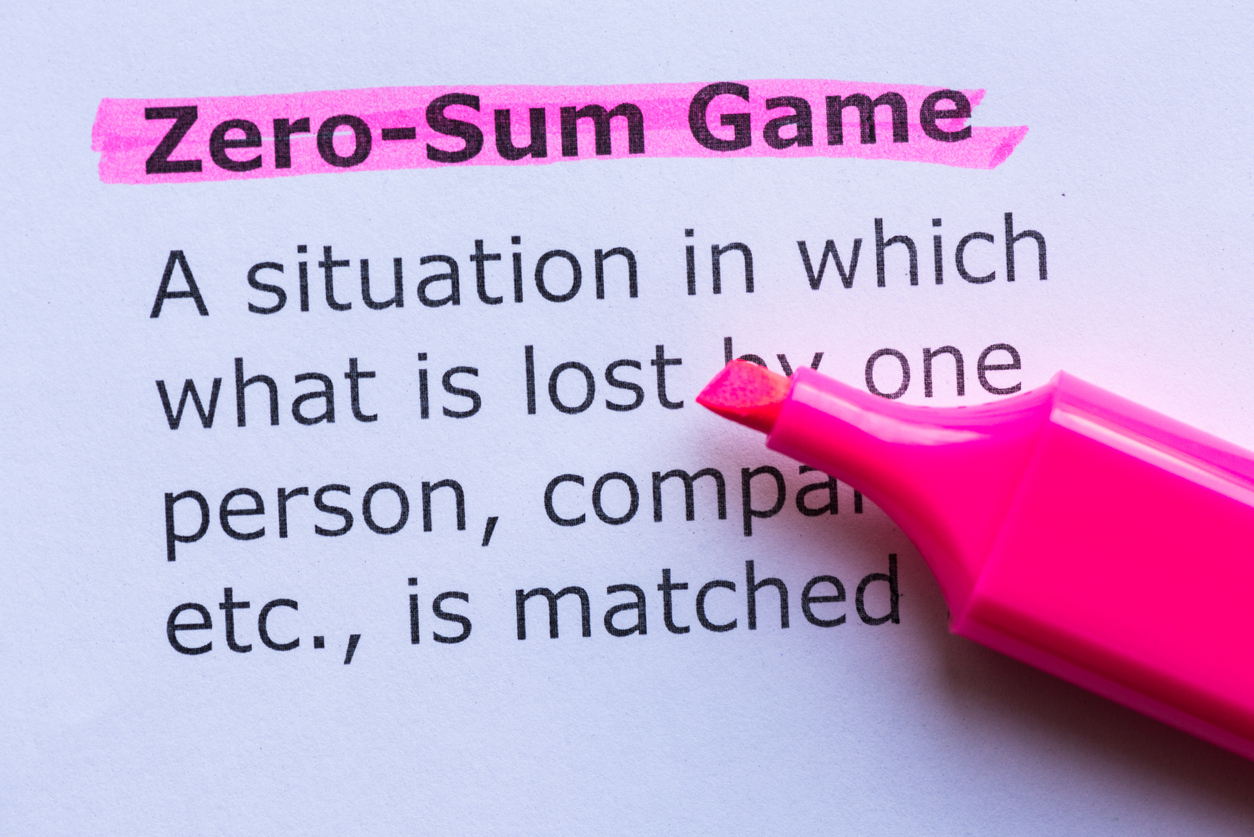 The Insider described Putin’s view of negotiating with international partners: he sees “foreign policy as a zero-sum game — a gain for one side comes at the expense of its opponent”. The West perceives itself as more typically pursuing strategic, collaborative negotiations, where mutually beneficial gains can be achieved. Yet we must still negotiate with President Putin despite the opposing approaches. As the CIA operative noted, “he is behaving rationally within the confines of a fundamentally irrational set of beliefs.” At his core, he is acting true to his personal Interests and what he believes to be Russia’s over-arching Interests. In this situation, we should treat Putin as a rational negotiator and work to prove his assumptions wrong before he will come to the table with any true intent to negotiate in good faith.
Must we provide a bridge or an off-ramp to Putin?
What can seasoned diplomats do next in this tragic situation? Do we have to provide Putin a way to “save face”?
World leaders are wielding myriad tools of influence as they try to resolve this situation swiftly and peacefully. Power is on full display by Russia, the West is implementing crippling  sanctions as a financial lever, Ukraine is certainly trying to persuade the West to enter the fray more boldly, and negotiations are ongoing - both between Ukraine and Russia but also between President Zelensky and NATO countries. Other stakeholders are exerting influence too - as China and myriad global oil producers factor in, directly and indirectly. US President Biden and Chinese President Xi Jinping held an hour-long telephone call to get clear on the implications of China wading into this situation - China’s influence will certainly impact what happens next in Ukraine.
Encouraging signs at the negotiation table have recently come from both Ukraine and Russia, but there are still some momentous hurdles to overcome. In Putin’s most recent televised appearance, his rhetoric ratcheted up again - he has tended to double down when he feels his position may be weakened. A peaceful end is not yet in sight. To prevent a tragedy like this in the future, some bridge to this elusive peace must be considered.
Stay tuned for future posts that address these dynamics in more depth: how will other players influence the outcome, the preservation of Western Interests, how public perceptions shape the narrative, and what other levers might be pulled at this historic negotiation table with profound implications.
Please provide us with some details and we will be in touch soon!