
Listen! It's the easiest and most valuable concession you can offer in any negotiation. You always get goodwill and information in exchange.

By Marianne Eby
Like me, many of you are returning from summer vacation. You relaxed, explored, and played. But you didn’t sharpen your negotiation saw. Or did you? Without realizing, you likely practiced your negotiation skills, and upped our negotiation quotient. Here’s my Top 5 negotiation lessons from summer vacation:
We’re refreshed upon our return from vacation. And without realizing it, we honed our negotiation skills in the process. Be sure to apply those summer lesson to your next negotiation.
By Leslie Mulligan
As the war in Ukraine expands and intensifies, we watch the sickening devastation and ask how can this be happening – has Vladimir Putin gone mad? The horror inflicted on innocent Ukrainians is so shocking, one might conclude that Putin has gone over the edge and lost touch with reality. Rational people wonder: why is he doing this, and can he be reasoned with to negotiate a diplomatic resolution to this nightmare?
Putin’s current position is clear – he presented the US and NATO his list of security demands in December 2021, including a guarantee that Ukraine never enters NATO and that NATO rolls back its military footprint in Eastern and Central Europe. At that time, his BATNA (best alternative to a negotiated agreement) was apparent - invading Ukraine (he has never truly ascribed to Ukraine’s sovereignty.) Negotiations had barely begun in January when Putin executed his BATNA. Ukraine and Russia were at war. And shortly after the invasion, Putin ratcheted up the rhetoric, threatening an even more terrifying BATNA – use of nuclear weaponry. The stakes are higher than ever for the West now, as Ukraine bears the brunt of this savagery.
Is Putin rational and should we negotiate with him at all?
Experts within the intelligence and national security community warn against viewing Putin as a madman. In early March, a veteran former CIA operative said of Putin, “He may have made a miscalculation, and many of his beliefs are wrong, but he is rational, consistent, and ruthless.” That ruthlessness is on full display as innocent Ukrainians suffer his brutality, resulting in a massive humanitarian crisis with more than 3 million refugees fleeing their country.
We know Putin’s position, but what are his interests – his underlying motivations. Skillful negotiators realize there is often more than one way to solve a party’s real concerns – why they want what it is they’re asking for – not just the position they put on the table. In negotiations, those concerns are called “Interests” and must be addressed for a sustainable resolution. In collaborative negotiations, parties address both sides’ Interests to create more value overall. Clearly, the situation in Ukraine does not invite collaboration – and yet we must still come to the table and craft a negotiation strategy that resolves this nightmare. Compromise, a less ideal strategy than collaboration, may not feel good but must be explored.
What are Putin’s Interests?
 If we focus just on President Putin, what are the Interests in play, underpinning his position? From his remarks on the world stage, Putin is clearly motivated by the paramount "goal of regaining the importance in the world the Soviet Union used to hold - and restoring Russian pride." Putin came of age as a young KGB operative during the Soviet era, when the USSR was the counterweight to the power of the West, namely the US. That is how he defines greatness - regaining the power of the former Soviet Union.
After the Berlin Wall fell and the USSR dissolved, Putin mourned “the national humiliation of a powerful state simply imploding”, notably not the “human cost or material tribulations ”. To Putin, the decades since the collapse of the USSR have not been kind to Russia. Fiona Hill (a NSC advisor to President Trump and former National Intelligence officer on Russia to Presidents Bush and Obama) gave an interview to the New York Times earlier in March, noting that Putin has "this mentality that Russia is always under siege, its leaders are always under siege."
Upon becoming the President of Russia in 2000, Putin was the embodiment of that greatness and the link between modern times and the Russian czars and czarinas that first achieved Russian prominence and pride. Putin’s real Interests then appear to be safeguarding his legacy as the restorer of Russia to its glory - reconstitution of the grandeur of the Soviet Union. Carlos Lozada wrote eloquently recently in the Washington Post: “Russia’s glory is his goal, but Putin’s own power is always the convenient means.”
If this crystallizes Putin’s Interests, can they be effectively addressed via negotiations or are other means necessary (and already in play)? Notably, addressing Interests works when dealing with most rational negotiators. But is Putin rational or irrational?
Irrational negotiators act against their own Interests
Irrational negotiators appear to act against their own interests in the face of good information. Is Putin acting against his own Interests? Reflecting on the siege mentality Fiona Hill noted, is it real or imagined, or a major miscalculation on Putin’s part? Peter Baker at The New York Times reported back in March of 2014 that German Chancellor Angela Merkel shared her insights on Putin with President Obama, “that after speaking with Mr. Putin she was not sure he was in touch with reality, people briefed on the call said. 'In another world,’ she said."
Both rational and irrational negotiators fall prey to miscalculations.
So, is Putin miscalculating because he is misinformed? Stephen Kotkin, the renowned scholar of Russian history and Fellow at the Hoover Institution, was interviewed recently by David Remnick for The New Yorker and stated that Putin “is not getting the full gamut of information. He’s getting what he wants to hear. In any case, he believes that he’s superior and smarter.” This is a potentially catastrophic problem with despots as evidenced by current events.
Putin addressed the Kremlin on the eve of the Ukrainian invasion with the rationale for what would soon befall Ukraine. One foreign policy analyst described it as a "resentful diatribe" that highlights his view of the deceit of the West in its approach to Russia. But the analyst underscores that “Putin was not being irrational.” In fact, it showcases how his “worldview is taking him into conflict”.
Kotnick continues, “war usually is a miscalculation. It’s based on assumptions that don’t pan out, things you believe to be true or want to be true.” That is playing out in real-time in Ukraine. Putin over-estimated his own military capability, assuming Kyiv would fall swiftly - a few days and a puppet regime could be installed. And he wildly under-estimated the fierceness and strength of the  Ukrainian resistance. And then there is the unity of the western democratic powers – President Zelensky inspires the West with his steely leadership. In Zelensky’s address to the U.S. Congress, he evoked the US’ history in Pearl Harbor and 9-11 to urge its increased involvement. Western powers have come together to inflict economic war on Russia, but also to buttress the Ukrainian forces with weapons and support – whether significantly more support is forthcoming remains to be seen, as the West has thus far rebuffed the idea of a no-fly zone over Ukraine. Regardless of Western maneuvering, Putin is discovering the danger of unverified assumptions; he has had to reach out to China to overcome Russia’s military preparedness issue - in hopes that China will provide material support. It is imperative to be crystal clear on what is known/unknown, and what is assumed, as you prepare for negotiations, let alone warfare.
Putin’s penchant - Zero Sum game negotiating
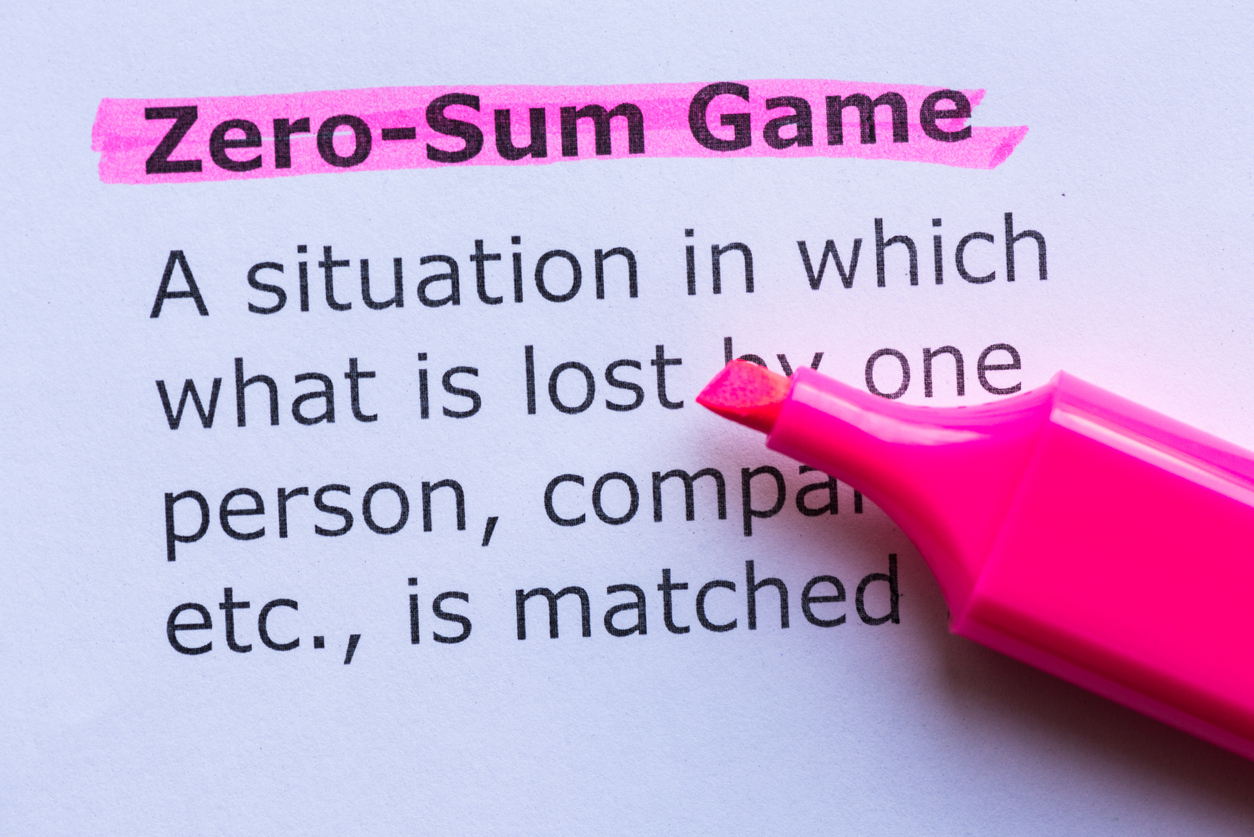 The Insider described Putin’s view of negotiating with international partners: he sees “foreign policy as a zero-sum game — a gain for one side comes at the expense of its opponent”. The West perceives itself as more typically pursuing strategic, collaborative negotiations, where mutually beneficial gains can be achieved. Yet we must still negotiate with President Putin despite the opposing approaches. As the CIA operative noted, “he is behaving rationally within the confines of a fundamentally irrational set of beliefs.” At his core, he is acting true to his personal Interests and what he believes to be Russia’s over-arching Interests. In this situation, we should treat Putin as a rational negotiator and work to prove his assumptions wrong before he will come to the table with any true intent to negotiate in good faith.
Must we provide a bridge or an off-ramp to Putin?
What can seasoned diplomats do next in this tragic situation? Do we have to provide Putin a way to “save face”?
World leaders are wielding myriad tools of influence as they try to resolve this situation swiftly and peacefully. Power is on full display by Russia, the West is implementing crippling  sanctions as a financial lever, Ukraine is certainly trying to persuade the West to enter the fray more boldly, and negotiations are ongoing - both between Ukraine and Russia but also between President Zelensky and NATO countries. Other stakeholders are exerting influence too - as China and myriad global oil producers factor in, directly and indirectly. US President Biden and Chinese President Xi Jinping held an hour-long telephone call to get clear on the implications of China wading into this situation - China’s influence will certainly impact what happens next in Ukraine.
Encouraging signs at the negotiation table have recently come from both Ukraine and Russia, but there are still some momentous hurdles to overcome. In Putin’s most recent televised appearance, his rhetoric ratcheted up again - he has tended to double down when he feels his position may be weakened. A peaceful end is not yet in sight. To prevent a tragedy like this in the future, some bridge to this elusive peace must be considered.
Stay tuned for future posts that address these dynamics in more depth: how will other players influence the outcome, the preservation of Western Interests, how public perceptions shape the narrative, and what other levers might be pulled at this historic negotiation table with profound implications.

By Leslie Mulligan
Businesses had to sharpen their negotiation skills as markets and supply chains endured enormous pressure in 2020. Now it’s the U.S. president’s turn to demonstrate his negotiation expertise in passing the $1.9 Trillion Covid-19 Relief Bill. Is he willing to collaborate with Congress, or will he take on a competitive approach? And how will the Republicans respond?
President Biden has made it his mission to tackle the devastating pandemic – it is the very first priority listed on the White House website. Specifically, he has vowed to get the massive $1.9 trillion coronavirus relief package passed in U.S. Congress and ensure Covid vaccines are distributed as rapidly as possible. Time is of the essence as the economy remains weak; many still face desperate times. Yet President Biden has also pledged a bipartisan approach to governance and wants to unite the country – so how do you negotiate effectively with Congress in this still polarized landscape to deliver on these promises; or do you?
Bipartisanship Approach?
Will a collaborative (win-win, interest-based) or even compromise approach produce bipartisan approval, or will the Administration have to take a competitive approach (win-lose) to get results.
Emerging from the last presidential election, the USA is seriously divided, no doubt about it. Yet President Biden is on a quest for unity, including in his Congressional relationships. As a long-serving alumnus of the Senate, he underscored the need for bipartisanship: “I think I can work with Republican leadership in the House and Senate. I think we can get some things done.” But will Republicans reciprocate – will they work with the president and their Democratic colleagues? We don’t know what is happening behind the scenes, but the president has only publicly met with 10 Republican senators in early February to discuss the Covid relief bill. And Republicans have felt rebuffed by their

Congressional colleagues: “…they were frustrated that their views weren’t being considered as Democrats pushed the legislation forward without GOP support”. This may foreshadow a competitive stance.
And yet, President Biden has the support of the American public writ large – even Republicans: “Half of all Republicans believe that President Joe Biden's $1.9 trillion COVID-19 relief package should be passed because of the proposed round of $1,400 stimulus checks, according to a new poll.” 73% of all Americans support this bill, according to a Navigator Research poll last week. Bipartisanship can be achieved in the public domain – that has certainly been realized in the run-up to the passage of this bill. But will any congressional Republicans come on-board? Jen Psaki, the White House Press Secretary, put this question succinctly when asked about Republican support: “Obviously, Republicans in Congress will have to make their own choice about whether they support the final package. But the vast majority of the public supports it, including the vast majority of most members’ constituents. So it’s really a question for them.”
But will Democrats entice them to support a negotiated bill, with a willingness to compromise by giving in on some of what’s been proposed, if not collaborate by finding new solutions that satisfy both parties? Or simply use a heavy-handed competitive approach to get what they want. The overriding negotiation strategy used here may set the tone for the next 4 years.
Time
Time is almost always a factor in negotiations. There is an adage in negotiating – “deadlines force concessions”. And President Biden feels the pressure of a looming deadline. On March 14th, over five  million people will lose their weekly $300 federal unemployment benefit. The PPP program runs out for small businesses on March 30th, and the airline industry may take a big hit as $15B in federal funds that subsidize payrolls also expires. But will Congress feel the same pressure of this deadline? Assuredly the Democrats largely will. But Republicans may resist the pressure, advocating that previous stimulus bills have set the stage for recovery - the trajectory is positive. Could Republicans use time as leverage to get more of what they want? All politicians have a political calculus even while making policy decisions – how will these deadlines impact their negotiations across the aisle and with President Biden?
Policy vs Politics
Great negotiators know that their positions are driven not just by what they can conceivably achieve, but by a greater business or overriding imperative. The same is true in negotiations over legislation. Politics are the quintessential overriding imperative that drives what each legislator is willing to do.
“Negotiation in Congress is never solely about policy; politics and policy are always intertwined”, per the Task Force Report published in December 2013 by the American Political Science Association (APSA), Negotiating Agreement in Politics, which sheds light on the challenges of American political negotiations. There are valuable lessons in that report, with pragmatic advice for all parties at the Congressional negotiation table. One truism comes from former Rep. Barney Frank (D-MA): “Nobody pushes for unpopular policies.” And it appears that the Covid relief bill is popular! But elected officials manage their politics to keep their constituents (and donors) happy - they must justify their policy votes. Those up for reelection in 2022 will weigh their policy decisions now against a potentially different political landscape one year hence. In fact, news reports indicate that Republicans believe they are better served to deny President Biden a “bipartisan win” – and so are working to keep their own party cohesive, and plan their own PR push to paint this Bill as “bloated”, disparate and not well-aimed.
Stakeholders
When defining any negotiating strategy, it is paramount to assess who your stakeholders and what their Interests are, and how they impact your plan. When it comes to legislation, there is no shortage of competing stakeholder Interests to address.
President Biden is banking on the American public as the most important stakeholder in this landscape. Most of them enthusiastically support this bill, and the timing is such that now is the opportunity to strike. Big business also supports quick passage of this Bill. Just this week, 150 of the country’s most powerful executives penned a letter to President Biden urging action: “Congress should act swiftly and on a bipartisan basis to authorize a stimulus and relief package along the lines of the Biden-Harris administration’s proposed American Rescue Plan."
Republicans may take the longer view, and assume that their stakeholders, their constituents, will accept resistance to this bill. After all, it may get passed even without Republican support. Then the subsequent policies will help everyone, without Republicans having to go “on record” as supporting a democratic presidential priority. “In short, explicitly partisan political considerations condition the opportunities for deal-making on policy issues,” suggests the learned authors of the ASPA report mentioned earlier.
BATNA’s
No seasoned negotiator enters negotiations without a back-up plan, known as a Best Alternative to a Negotiated Agreement or BATNA. That means both sides of the political aisle have BATNAs in play that they are willing and able to execute.
Can the Covid relief bill pass without Republican support? Does President Biden have an alternative to a truly bipartisan bill, a BATNA in the lexicon of negotiating? Absolutely – after all, the Budget Reconciliation tool is available to him, now that Congress passed the Senate’s budget earlier in February. As long as the Democratic party stays cohesive, this enables passage of the Covid relief bill with only Democratic support. If Democrats prove each item in their reconciliation bill has a direct budgetary impact, this tool can be used to prevent Republicans in the Senate from filibustering and blocking the floor vote. So inasmuch as President Biden would like Republican support, it is not necessary for passage of this bill. His BATNA is strong, and he is willing to execute it, to ensure the needs of the American public are being met. Republicans too have their BATNA – they can decline to support this Bill, counting on their supporters to look positively on that decision down the road. This is a risk, but will they be willing to take it?
Trades
Negotiators come to the table prepared to trade. And President Biden has indicated some willingness to trade on the minimum wage – its inclusion in the Bill at all, a phased-in timeline to protect small businesses, and maybe even the new wage rate.
There are two factors that complicate this element of the bill. First, Senator Joe Manchin (D-WVA) has said he does NOT advocate for the full $15/hour – although he would support a reduced rate of $11/hour. Second, couple that with the fact that the Senate parliamentarian has ruled that as written, the minimum wage hike does not meet the threshold of having a “direct budgetary impact” – thus eliminating it as is from inclusion in the Budget Reconciliation Bill. This bargaining chip may come off the table entirely when the Bill reaches the Senate, or it may become a viable bargaining chip. The president has said he is open to negotiating the minimum wage. But cohesion among the Democratic senators will still be crucial on other elements of the bill, and keeping Senator Manchin in the fold may be a challenge that President Biden faces beyond just this particular legislation.
Final Thoughts
This bill will get passed, but probably with Democrats taking on a competitive approach ultimately and driving passage without any compromise. President Biden is willing to execute his BATNA and believes that his primary Stakeholder – the American public – needs the relief that it will provide, and will reward his Administration for it. Bipartisanship will have to wait, as the president feels the pressure of the March deadline. The Republican political calculus indicates that they too can take a competitive approach and won’t be penalized by their supporters. But this first interaction between the president and Congress may not bode well for collaboration between the two parties in the future. Time will tell, so stay tuned.

By Leslie Mulligan
All of us want to see professional sports up and running again, and MLB could be the first post-Covid-lockdown. But only if the Major League Baseball (MLB) with its powerful, moneyed owners and the Major League Baseball Players Association (MLBPA), a seemingly united players union, can bridge their financial divide on players’ salaries. But deadlines force concessions: if Opening Day does not come by early July, there is no hope for a season this year. Which means we MUST be in the final stages of a 2020 baseball negotiation!
On March 16, the baseball season was formally postponed by MLB due to Covid-19, till at least mid-May, but with hopes of still playing a full schedule, as documented in this CBS Sports timeline.
Both sides were eager to plot a path forward and so convened at the negotiation table on March 26 to define what opening up again would look like. At that moment, the owners and the players were willing to tackle the health and safety challenges ahead, and also agreed to pro-rated player salaries on whatever might remain of the season. After all, no one wanted a repeat of the 1994-1995 season where the US national pastime stopped abruptly on August 11, when Collective Bargaining Agreement talks broke down. Public sentiment for baseball took a hit that year with no World Series; both sides want to avoid reliving that history as a result of Covid-19.
Owners and players were “on the same page” on March 26, trusting each other to forge ahead together. Normally, major leaguers trust MLB owners to ensure their livelihoods with generous salaries, but with Covid-19 looming, players now were trusting MLB with their lives as well. Trust is crucial to any successful business partnership, but most certainly to the negotiations that serve as the foundation of an alliance.
Since late March, MLB and the players union seem to be successfully negotiating health and safety issues for the athletes as they take the field again, both in spring training as well as on the field, although some open issues remain. But one financial element became a significant obstacle -- player compensation. MLB expected that when the season started, they could play in front of their fans, and their initial proposal was based in part on the expectation of stadium revenue.
Without fans, the owners realized they could lose more than $640,000 per game, with no gate receipts or merchandise/food & beverage sales. That March 26 agreement was swept off the table with this new premise, as it was clear that  baseball stadiums would not soon be filled with cheering fans. It’s not unusual that mid-negotiation, assumptions about the future change -- raw material prices rise, mergers occur, markets collapse, and in this case, a pandemic shuts down the gathering of fans – the crucial element to profit. Both sides went back to their camps to reconsider. The players expected to ensure that their salaries remained “whole,” but were willing to pro-rate their overall income, depending on the number of games played. And of course they want a longer season as a result. The owners insisted that with their revenue cut due to empty ball fields, they expect the players to share that loss by only earning some percentage of their pro-rated salary – the % to be negotiated.
The next MLB Proposal came in early May: “MLB and the owners will seek additional pay reductions from the MLBPA to account for the revenue lost by not having fans in the stands. MLB will propose a 50/50 revenue split in 2020.” The players were NOT having it – a 50% cut when they had anticipated 100% of their per game salary. Any trust that existed in late March eroded quickly – as Jeff Passan of ESPN wrote on May 26: “Trust, on the other hand, is hard to come by, and if this thing falls apart -- if the absence of a good-faith negotiation dooms the 2020 baseball season -- it won't be directly because of the coronavirus pandemic. It will be because of the erosion of trust in recent years among the leaders on both sides poisoned and polluted the landscape to an extent that a deal never was going to happen in the first place.”
The MLBPA challenged the owners to produce the data showing the financial losses that the owners claimed. In any negotiation, each side more easily comes to an agreement when they feel the offers are fair. Challenging data is often key to one side accepting an offer. Already the players felt disadvantaged, stressing that the health risk falls predominantly on the players taking the field, so the data needed to be reviewed and assessed to show more games produce greater losses.
But neither players nor owners want to be painted as the villains in this play, so discussions have continued, with the clock ticking loudly.
A number of proposals have gone back and forth since that first MLB offer; fortunately, the health and safety challenges are being collectively and successfully tackled by both parties. However, financial hurdles persist. Neil Paine of FiveThirtyEight.com provides a deep dive into the MLB financials yet concludes “it still seems like all parties involved have too much to lose not to come to a compromise.” Some creative solutions have been introduced, with the potential deferral of salaries in the event the post-season is canceled, but owners pushed back on that. Even wealthy team owners are nervous about an uncertain future, and some have voiced concerns about already being maxed out on credit lines.

So for a 2020 season, what alternatives does either side really have, if any? In the lexicon of negotiation, what are their Best Alternatives to a Negotiated Agreement (BATNAs)? MLB and the owners believe they can unilaterally implement a shorter schedule season, but they risk the wrath of the players if they do. How the players react to that will be telling. Will they walk away and forego all 2020 salaries, citing health risks? Or will they file grievances that would take months to work through in arbitration and still may not conclude satisfactorily for either party? BATNA’s are never ideal!
So where does that leave the baseball fan now? The reality is that in negotiations deadlines force concessions! And MLB wants to get a 3-week spring training underway as soon as possible so that they can target a July 4th Opening Day. Why is that? Oddly enough, it is with the end in mind! The Washington Post’s Dave Sheinin writes “MLB believes it needs to complete its postseason, its primary driver of industry revenue, by the end of October to guard against a potential second wave of the coronavirus.”
As of June 8, the latest MLB proposal was for a 76-game season, with 75% of pro-rated salaries, but not all of it guaranteed. Only 50% assured, based on the regular season; if the post-season is canceled, the remaining 25% disappears. Once again, the players have pushed back. But the MLBPA response is due June 10, ironically the day they had hoped spring training might begin. Who has more to lose? Owners or players? I think it’s the stakeholders – baseball fans. Let’s see if some trust can be regained in these final weeks, as July 4th is not that far off – that looming deadline should push both parties back to the negotiation table in earnest. Let’s hope we all hear “batter up” soon!
By Leslie Mulligan
Donald Trump is certainly dominating headlines these days as he campaigns for President – he is all over TV news, social media and can’t help but pop up in our daily conversations with friends and family, regardless of your political leanings. But he has never been shy, as a long-time fixture on the NY real estate scene; he promotes himself as a skilled “deal-maker.” As a negotiating expert and trainer myself, I was compelled to read his first book, Trump: The Art of the Deal, to explore what negotiation concepts he relies on, and maybe to see what he misses. Regardless of his own “pomp and circumstance”, based on the ideas in his book, what grade would Trump get in Negotiation Fundamentals – Pass or Fail?
Let’s walk through the book a bit before we grade Mr. Trump. Overall, the book is a good read, shedding light on this provocative political candidate with deep dives into many of his real estate deals. He does frame a few negotiating fundamentals, but the narrative really serves as a showcase for Trump’s inimitable style. He liberally uses old-school negotiating tactics, which may work one time, for one deal, but do not necessarily play well in long-term business relationships. Does Donald Trump “play well with others?" His book highlights mostly his successes, as you would expect. But in this blog, I will dissect his view of Negotiating a bit, with lessons learned for all of us. In any case, the stage has now shifted, as he plunges into the political arena. In fact, Trump himself proclaimed in his presidential announcement last June: “We need a leader that wrote The Art of the Deal.”
Although originally published in 1987, I read Trump's book this year for the first time. In fact, with Trump’s recent political ascendancy, many people have been prompted to buy the book; The Art of the Deal’s sales have jumped, to the point where the book is hovering around the Top 100 books on Amazon – quite a coup for an almost 30–year old book (that sold millions when originally released). It is also the #3 Best Seller in Amazon’s Business Professionals Biographies.
Politics aside, here is my critique of Trump's first book and his thoughts on deal–making. How would Donald Trump do in a class on Best Negotiating Practices?
The original New York Times book review had an intriguing closing comment, perhaps prophetic for current Trump loyalists: “Mr. Trump makes one believe for a moment in the American dream again.’’ After an introductory chapter that chronicles a week-in-the-life of Mr. Trump, Chapter 2 tackles the substance (and style) of his deal-making prowess – The Elements of the Deal – opening with an autobiographical perspective:
"My style of deal–making is quite simple and straightforward," he writes. "I aim very high, and then I just keep pushing and pushing to get what I'm after. Sometimes I settle for less than I sought, but in most cases I still end up with what I want."
He then illustrates 11 key elements of “the deal”, which are articulately summarized in a recent Business Insider article. When I ponder a highly successful negotiation that yields win–win results, 6 of Trump’s eleven Key Elements resonate quite loudly with me (we will revisit the remaining five later in Part II of this blog).
1– THINK BIG
The first and perhaps most important Key Element is Trump’s call to action: Think Big! He urges “If you’re going to be thinking anyway, you might as well think big”. This is Negotiating 101 – and so is definitely worth exploring further. Any negotiation eventually produces some give and take; you rarely close at your very first offer. In fact, be forewarned – if you do close at your very first offer, you may have used persuasion, not negotiation, and later, the other side may have “remorse” about the deal.
But in a normal give and take, to maximize your results you start by opening big, as you will inevitably come down off of that first offer through the course of bargaining. What Trump misses is that if you start so aggressively that your opening is indefensible, you lose credibility and trust. So think big, but be sure that you can make a substantive, realistic case for your first offer – you want to be taken seriously on every offer that follows.
Trump tries to separate himself from lesser negotiators:
“Most people think small, because most people are afraid of success, afraid of making decisions, afraid of winning.”
I disagree. The negotiators I work with may be less skilled, fear conflict or lack confidence, but they do want success. So I challenge you to quell your anxiety, and most importantly, do not negotiate against yourself before you ever sit across the table from a negotiating partner – go ahead, stretch and think big.
2– PROTECT THE DOWNSIDE, AND THE UPSIDE WILL TAKE CARE OF ITSELF
Donald Trump is a realist, well, maybe more of a pragmatist, too. His 2nd Key Element is "Protect the Downside and the Upside Will Take Care of Itself." To me, this means that although he thinks big, he definitely considers his “bottom line”, so that he knows when to stop in any negotiation – self-protection, if you will. In negotiating parlance, we define a Negotiating Envelope (also known as the Zone of Possible Agreement) – two end points that establish your Most Desired Outcome (MDO) by thinking big, but also your Least Acceptable Alternative (LAA) that protects your downside, by contemplating the lowest you are willing to go. Savvy negotiators push themselves, stretching when they set their objectives initially, and then confidently open at the negotiation table, but only after privately setting a walk-away point. This focus on your plan will frame your success.

3– KNOW YOUR MARKET
I wholeheartedly support Mr. Trump for emphasizing Planning – preparation is critical in any negotiation – actually, the more prepared you are before you sit down at the table, the more confident you will be. And we know that Donald Trump does not lack for confidence. This idea is echoed in another of Trump’s Key Elements – "Know Your Market." He may mean this primarily in the real-estate/business sense, but any good negotiator knows that the more prepared you are, the more you increase your chances of success. Think through not only your Negotiating Envelope, but also the other side’s, consider what the other side is most likely to offer – and really want. The best negotiators spend much more time planning and preparing than they ever do in the actual negotiation. Never sit down with the other side until you have thoroughly vetted (or at least thought about) not only your own negotiating strategy, but your negotiating partner’s, too. Our refrain is, “A failure to plan is a plan for failure.”
4– MAXIMIZE YOUR OPTIONS
During the planning phase of negotiations, do not get fixated on only one approach – having back up options gives you leverage. Trump knows this, as he commands us to "Maximize Your Options:"
“I never get too attached to one deal or one approach.... I always come up with at least a half dozen approaches to making it (a deal) work, because anything can happen, even to the best–laid plans.”
Plan B and Plan C, alternatives to any deal you are negotiating, are what we call BATNAs in negotiating parlance. BATNA – the Best Alternative to a Negotiated Agreement – means you have leverage, and power, at the table. A BATNA is a well–conceived plan that you are willing and able to execute if no agreement can be reached. You want the other side to worry that you may walk away from the table and execute your own plan B – and you know Trump plays that card. Now Trump may bluff at times – sometimes it feels like he is bluffing when we watch him campaigning – but it is clear that he knows the value of BATNAs.
5– USE YOUR LEVERAGE
BATNAs clearly provide leverage, but they are not the only way to gain leverage at the negotiating table. What is leverage? Trump defines it well:
“Leverage is having something the other guy wants. Or better yet, needs. Or best of all, simply can’t do without”.
These are what we call Interests – you want to delve into the other side’s underlying interests, why they want what they want.
In his book, Trump describes a time when he was interested in buying a corporate jet – he really wanted a 727 but it cost $30 million at that time, so he had his brokers looking for a G-4, going for only $18 million. Serendipitously, Trump discovered that Diamond Shamrock, a Texas oil and gas company, was in serious financial difficulty, even while its executives had been enjoying the perks of a decked–out 727. Not surprisingly, new management now wanted to ditch the jet, as well as shake up the executive team.

Trump made a call, starting with some pleasantries, and expressed interest in Diamond Shamrock's jet. It was clear to him that the new CEO wanted to deal. Trump then low-balled an offer at $4 million, admitting to himself even that this was absurd. But knowing the other company was in desperate financial shape gave him leverage. Indeed, Diamond Shamrock countered at only $10M, as unloading its corporate jet was a primary Interest. Both sides agreed at $8M, a tremendous price for a refurbished jet with all sorts of fancy amenities – just Trump’s style.
In this case, Trump leveraged his knowledge of Diamond Shamrock’s financial troubles, and its need to both lose a costly asset and send a message to Wall Street around a new management team at the helm. In negotiation, we often think about what we need – but to really hit a home run, you need to spend more time thinking about what the other side needs, and why they need it. If you know what they need, and you can deliver it without a huge cost to you, then you have leverage – the upper hand!
6–HAVE FUN
The final Key Element in Trump’s book that I really value is "Have Fun!" His view is almost child-like: “The real excitement is playing the game,” and he maintains that he has a very good time making deals, especially all of the deals described in his book. This may sound like boasting, but still, I applaud this advice to have fun. People who have fun while engaging in otherwise stressful activities – think parenting, mountain climbing, negotiating – excel more than others.
Collaborating to reach a solution can be energizing, socially gratifying, and filled with surprises. If you approach the agreement with the spirit of cooperation and collaboration (rather than conflict), not only will you enjoy it more, but you will get a better result – for both sides! Many people shy away from negotiating because they view it as conflict; someone has to lose, right? Well, not necessarily; both sides can win. Interest–based, collaborative negotiations yield better results. Trump may lose sight of this from time to time, but that doesn't mean his advice to have fun won't help you become a better negotiator.
What didn’t I agree with in The Art of the Deal?
I believe that we can all become better negotiators – by learning, by practicing, by experience. Trump, on the other hand, believes only some lucky few have an inherent capability to dazzle at deal–making. He asserts, “More than anything else, I think deal–making is an ability you’re born with. It’s in the genes.” I respectfully beg to differ; we can all improve, by enhancing our current negotiation skill set, adding some better strategies, and reinforcing our confidence.
Donald Trump plays hardball a bit more than necessary, probably because he comes from an old–school perspective. Uber–competitive tactics do not foster long-term collaborative partnerships in business – but it is his style, that is obvious. There were also strategies and behaviors that Trump missed in his 11 Key Elements – skills that can be invaluable to a negotiator.

Finally, I give Trump a PASS in Negotiating Fundamentals, but I would say he is a low B student.
Come back for Part II, when I lay out essential concepts that Trump may miss (or misuse), which will transform you from a good negotiator to a great negotiator, regardless of your DNA. Become an A+ negotiator!

By Thomas Wood
Are you “on the fence” about your neighbors? I train seasoned business professionals to negotiate in a wide range of industries and professions, and it never fails that I get asked to help with someone’s latest negotiation problem -- not with a key customer or difficult supplier -- but with a neighbor. Everyone has a story to tell! Learn from the mistakes even I succumbed to in neighbor negotiations.
You don’t get to choose your neighbors, and you don’t have to like your neighbors. But unless you are a billionaire like Mark Zuckerberg and can purchase your neighbors' properties in order to protect your own privacy and view, you will have to deal with your neighbors. Here's my tale of hard lessons learned.
My wife and I bought a house next door to a sophisticated widow of considerable wealth - we called her "Lady H." Lady H had previously owned our adjoining lot, with her house being grand and ours being, well, quaint - a more modest guest-house. Lady H lived alone in her old age and wealth, and barely recognized the existence of my family despite our attempts to win her over with fresh picked blue berries and smiles across the lawn.
Years earlier when Lady H owned both parcels, she had a fence placed near our joint property lines but located squarely on my parcel – a chain link fence that was now in disrepair and unsightly. My wife and I were ready to upgrade our property, and assumed that Lady H would appreciate the investment, as it would add to the value of her property as well. We decided to tackle the thing most unbefitting to our properties – the rusted chain link fence on our parcel.
As an expert negotiator who coaches others, I knew exactly what to do – prepare my options and strategies before negotiating a deal with Lady H. We did our research and formed our strategy, and then dropped by to see Lady H. I told her we were taking the old chain link fence down, and handed her a brochure that showed fences with the same open air view as her chain link fence, but added sophistication befitting her estate. While my wife and I were ok with all the options, I didn’t share that with her, as I wanted to see what Lady H wanted first. I had planned to then reluctantly accept her fence preference in exchange for several other things we wanted, like for her to have a dead tree on her property taken down that posed a threat to our safety.
I was ready to discuss options and begin some give and take, but she cut the conversation short. Pointing to the most expensive option, a decorative iron fence, Lady H nicely said, “I like this one. Do what you need to do,” and thanked me for coming by. I was surprised, but pleased at least with the efficiency of our “negotiation."
When our new and very expensive iron fence was installed, I was thrilled. We could see each other’s lovely gardens but without having to look through the eye sore of that rusted chain link fence. My satisfaction was short lived.
A week later, Lady H installed a taller, builder-grade, wood privacy fence on her property, abutting and completely overshadowing the new iron fence. What had I done wrong? Everything, pretty much!
First, know your neighbor's true interests.
I didn't bother to learn Lady H's interests - why she wants what she wants. It turned out that Lady H regretted having sold the adjoining property because she now had a young noisy family that liked to spend time laughing and playing outside - ours. Lady H had grown older since the days when she had installed that chain link fence, and her interests had changed; she now wanted quiet and privacy.
Second, understand who you are dealing with. 
Lady H could have simply proposed a privacy fence, and not had to spend her own money to get the privacy she wanted. Why didn’t she? Easy to see why in retrospect:
Third, to negotiate a solution requires collaboration.
I did not trade value to reach a mutually beneficial solution, which is how you capture value in collaborative negotiations. When the other party says “Yes” right away, you can be sure that either you did a great job of convincing them, or like in my situation, you are being outmaneuvered. Maybe you unwittingly offered them more than they ever thought they could get, so they jump at your offer, or maybe like Lady H, they have a strong plan B that they are ready and willing to implement. A quick and easy win in negotiations usually turns out not to be a win at all.
With neighbors and in business, knowing the other party's ego needs, interests and BATNAs, engaging in a collaborative conversation to solve your interests and theirs by trading for value – determines whether you actually get what you want. Robert Frost's famous line - Good Fences Make Good Neighbors -- perhaps should have been Good Negotiators Make Good Neighbors.

By Thomas Wood
Fortune 500 companies exert power in the marketplace, and by extension in negotiations. It's easy to exert power in negotiations, but not as easy to use it wisely. Seeing the new Fortune 500 list just released, and how many of our clients are in it, made me think of the many discussions with those clients, and their customers and suppliers, about the perils of being powerful.
This week Fortune released it's 61st Fortune 500 list. Fortune 500 companies are ranked for FY revenue reported, together totaling $12.5 trillion. They reported a combined profit of $945 billion, and employ almost 27 million people around the world. To say they have power at the negotiating table is an understatement.
Watershed Associates has served many of the Fortune 500 with negotiation training, including three of the top 5. We advise many negotiators in these Fortune 500 companies about their real world challenges. The negotiators on the front lines know that power from size can be real or perceived, but it can also shift easily. Revenue and profitability giants don't always hold all the power; many factors influence who holds the power in a negotiation:
But when you do have the power in a negotiations, you still have challenges:
Others are trying to shift the power balance; bet on it!
Power holders are often less diligent and thus more oblivious to the growing power of the powerless; they don’t assess the situation accurately and don’t change to suit it. This arrogance can leave you oblivious to a growing source of power.
Your behavior reveals much to the other side and can drive defensive behavior.
For example, when a customer or supplier feels they get unfair deals from a powerful company, they might shift power by building coalitions, give better deals to the competitors at your back door, and strengthen relationships with your next generation decision makers. Or if they feel the deal struck was one-sided, there is always potential for you to be blindsided or receive less during execution of the contract, and the party who feels they got less at the bargaining table will be the one looking for ways to recapture that value during the contract period. Remember, the powerless go on the offensive if they perceive unfairness.
The powerful are not always liked.
Let's face it, we can love a company on its way up -- think Amazon or Google or Microsoft -- but once those companies became giants, we started rooting for the new players. There is greater focus on showcasing failings of the powerful, so they are actually more vulnerable to downfall than the smaller companies.
With power in hand, what can you do to keep that power from working against you? Try these 4 strategies to use your inherent negotiating power wisely:
1. Be Likeable.
Being likeable is highly underrated in life and in negotiations. There is lots of advice on how to be likeable. And being likeable doesn't mean you give away value at the negotiating table. It does mean that you:
Remember, companies don't negotiate. People negotiate. And people extend the most consideration to people they respect and trust.
2. Ask for Collaboration
Articulate your company’s interest in mutually beneficial negotiations with smaller players. Literally, ASK them to engage in a collaborative discussion with you. Persuade your less powerful counterpart why you want this deal (because they may be assuming you don't really care, and thus they have nothing to lose by playing hardball). They will be surprised to hear you ask them to be collaborative, when that is exactly what they thought was not attainable.
3. Demonstrate You Are a Collaborator
The less powerful counterpart comes to the table expecting to have to grab whatever value they can and hide any weaknesses. If they find you are collaborative from the start, they become less guarded. When they are less guarded, you will be able to identify their interests and find alignment with yours in a way that builds value rather than simply dividing it.
To show you are collaborative:
4. Never Threaten Your BATNA.
If you have the power, your less powerful counterpart knows you have BATNAs, or alternatives to this deal. No need to talk about your BATNAs. When the powerful talk about their leverage and alternatives, it is perceived as a threat. People react to threats with every possible counter offense.
Being a collaborative power holder pays dividends now and later.
You want the other side to expose their true interests, propose ideas and creative solutions, so that more value can be created and a sustainable agreement results. You want to be known as a fair negotiator who creates value at the bargaining table. Flaunt your power, and you will not achieve this. And one day, the power will shift!

By Leslie Mulligan
Taylor Swift made a big splash this week when she removed her album, 1989, from Spotify, one of the world’s largest digital music companies – calling Spotify a “grand experiment” that was under-valuing the beloved music created by her and many other artists. Her attempt to gain leverage in negotiations is a strategic move, but will it work?
Taylor Swift took a stand by pulling her music catalogue away from Spotify, a growing digital music service that provides a two-tiered model to “lure listeners away from piracy.” Her stand calls attention to a growing power imbalance: amazingly, Spotify only launched in 2008, but now has over 50M users worldwide. Spotify’s growth, mirroring the rest of the digital music industry, has been astronomical, but many musicians feel they are now being unfairly compensated in the new “streaming” era.
So far, Swift’s “negotiation” with Spotify has played out more in the public domain than in the well-heeled hallways of NYC, Spotify’s US HQ. Swift is adeptly following many of the principles that expert negotiators advocate when confronted with an imbalance of power – what to do when power has shifted out of your favor:
Have a strong BATNA and be ready to execute it –Taylor Swift is in the enviable position of having pretty deep pockets herself, and she will still make serious money on 1989 and the rest of her music as she has myriad other outlets for the sale of her music, but firing the first salvo like this certainly got the attention of the digital streaming music industry. Rolling Stone magazine quotes Swift’s record label President, Scott Borchetta, as describing this move as a “big fist in the air”.
Paint a picture of what will happen if a “deal” falls through – When Swift followed her first move by then yanking her entire musical catalogue, the vision of the future without Taylor Swift was crystal clear, and not a pretty picture for Spotify. Can Spotify hold off other artists who may feel the same way?
Create coalitions: Taylor Swift is the darling of Pop music, and the biggest name to call out Spotify, but she is only one in a growing group of well-known but disgruntled artists: Jason Aldean of the Country music fame has also pulled his most recent album, Old Boots, New Dirt. But it is not just the Pop/Country worlds that are vocal: the Black Keys and Radiohead of the Rock world have also expressed concern, if not fear, of the changing landscape. David Byrne, lead singer of the Talking Heads of rock infamy, criticized streaming services just last year. Even informal alliances, if not formal coalitions, can impact the balance of power in your favor.
Attack the source of their power – Spotify’s success has come from the rapid growth in its user base. But if the fans are unhappy with the musical selection, or even just concerned that their favorite artists are unhappy, who knows what may come next – a fan revolt? Well, Spotify is already trying to shift the balance of power back, with their recent blog posted Nov 11th, making sure that the fans know that we are the center of the Spotify universe, but not to the detriment of their artists.
Reveal some of your interests -Using the media mouthpiece, Borchetta hinted at what Swift really wants – more control. Borchetta criticized Spotify for its lack of flexibility: "They take [the music], and they say, 'We're going to put it everywhere we want to put it, and we really don't care about what you want to do. Give us everything that you have and we're going to do what we want with it.' And that doesn’t work for us. . . . They just need to be a better partner.” It’s not unusual for a negotiator to demonstrate their plan B with a left punch while reaching out their right hand for a future deal.
Most of us do not have the resources or fame of Taylor Swift, but we can address power shifts in our own negotiations by following these tried and true principles. These strategies should level the playing field if not improve your position outright. But taking these steps may not mean success – the pundits at Harvard assert that Taylor Swift’s moves are an anomaly and she may be the proverbial lone wolf. Only time will tell how the power shakes out, but hopefully fans around the world will still enjoy the music.

By Marianne Eby
There are many places in the world where consumers haggle and would never pay asking price – like the souks of Marrakech and the Beijing Silk Street Market. But nowadays even the US retail stores are fertile haggling territory. Know how to extend your holiday haggling into the January 2014 retail sales bonanza.
Haggling is a cousin to serious negotiations. Haggling is the back and forth that is used to get a quick deal from someone you aren't likely to deal with again, like in the souks and flea markets. A 2009 Consumer Reports survey found that only 28% of Americans say they haggle often. But by 2011, talk of negotiating price tags at retail stores became a common sport of savvy consumers who read Kiplinger advice columns. And now it’s so common that one click on wikihow teaches us how to do it.
As reported in the New York Times, what’s more interesting in this last holiday season is that retailers are both training their floor sales managers to haggle, and inviting the public to do so. This may be an attempt to turn the tide from consumers who use brick and mortar stores for looking, only to return home and search the Web for the best price on the same item. The retail stores are fighting back. One has trained its managers not only to meet competitors’ prices, but given them authority to beat them. And they’re not just focused on price, but are creative in offering you add ons (that may or may not meet your needs).
As consumers, our job is to answer this call to action. You don’t need to be someone who negotiates deals at your day job; you just need to follow a few simple guidelines -- the fundamentals all master negotiators hone:
Want more advice? Here's 10 Tricks for Haggling Over Price at Any Store.
One more reason to haggle in this January's retail sales?
Negotiation takes practice. The more you practice, the better you become at building rapport, asking for what you want, seeing possibilities, asking questions, and leveraging your willingness to walk away. The more you do it, the better negotiator you will become.
Have fun haggling in and out of your vacation paradise!

By Thomas Wood
We tried to restrain ourselves from commenting in our negotiation workshops these last two months on the drama going on near our Washington, DC offices as the US President and Congress negotiated the US debt ceiling, with the President’s signature healthcare legislation – Obamacare – as the bargaining chip. Careful to stay neutral, but always alert to the strategy angles, we now have a few things to say, and they are all seeped in the fundamentals of negotiating. This Energizer Bunny just keeps on giving!
Negotiations to reopen the shuttered federal government and raise the nation’s debt ceiling were notable for one side’s insistence that it wasn’t negotiating at all. But despite the claims of President Obama and other Democratic leaders that they wouldn’t bargain over what they described as the basic functions of government, in the end they worked out a deal with their Republican adversaries. Most of us just don’t mean it when we say we won’t negotiate.
What other negotiating lessons can we learn from Washington’s latest fiscal crisis? At least five fundamentals.
1. The first is that preparation takes time. Although the partial shutdown of the federal government caught many Americans by surprise, defunding the government as a strategy for derailing health care reform was a plan in the making by an important faction of the Republican Party. President Obama, for his part, apparently decided in 2011—in the midst of another debt-ceiling confrontation—that he would never again negotiate over whether Washington should have enough borrowing authority to pay its bills. As it generally does, this early planning affected the outcome of the negotiations.
2. Another prominent feature is the power of deadlines. Deadlines often figure in negotiation—sometimes proposed to spur action in a cooperative way, sometimes wielded as a weapon by one side to intimidate the other.
Government funding was due to expire October 1 and the Treasury’s borrowing limit (the “debt ceiling”) would be reached on October 17. There was a difference between the two, however: the first was acknowledged by both parties to be justified and absolute, since it was the statutory end of the government’s fiscal year. The second was a less concrete estimate by the Treasury. Some Republicans probed this second deadline, suspecting it was arbitrary and changeable. Though the GOP was criticized for questioning the precision of the debt ceiling deadline because the consequences of default were so severe—regardless of exactly when it was triggered—in less drastic situations such probing of deadlines is entirely appropriate.
3. Third, our approaches can evolve as the negotiations evolve. Like most political confrontations, the strategy when this negotiation began was competitive. Each side felt it had right on its side and demanded the other yield. The Republicans, however, almost immediately shifted to what they presented as a compromise strategy, inviting the President and other Democrats to talk out their differences. But Democrats felt secure enough in their position—and viewed the GOP proposals as so unreasonable—that they didn’t feel pressured to go along. This is not usually a practical strategy for ongoing relationships such as the President and Congress must maintain, but such is the degree of political polarization in Washington today. Eventually, to break the weeks-long deadlock, Democrats joined in the compromise strategy, which seeks to give something to each side.
4. Fourth, positions are merely one way to satisfy interests. That’s why positions move in negotiations. The general wisdom is that the Republicans got much less than the President out of this compromise settlement, but some commentators think that viewpoint is confusing positions with interests. In fact, Republican positions changed over the course of the negotiation: beginning with a demand to defund or delay the implementation of the Affordable Care Act (Obamacare), then moving to other tax and spending issues, and eventually to policies disconnected from the budget.
But Republican interests remained the same throughout: a smaller, less intrusive federal government funded by lower taxes. Viewed that way, even though health care reform was only slightly modified, a central GOP interest was served by maintaining existing spending restraints in the temporary budget adopted as part of the deal.
5. And last, without a strong Plan B or BATNA, there is little likelihood of a big win. One reason President Obama could at least in the beginning maintain that he was not negotiating, and in the end get more of what he wanted, is that the other side began the process without apparently developing a strategic Negotiation Envelope. This is a planning tool that maps out wants (Most Desired Outcome), reasonable expectations (Goals), fallbacks (Least Acceptable Agreements) and “Plan B” (Best Alternative To a Negotiated Agreement—BATNA). The most aggressive GOP leaders of the confrontation seemed to have identified a lot of Most Desired Outcomes, but not one Least Acceptable Agreement. And there was no viable BATNA, since the public would not put up indefinitely with a closed government or with the economic chaos caused by a national default.
Perhaps that’s the principle negotiating lesson of the federal fiscal crisis of 2013: set a reasonable goal and chart a path to get there. Whatever the merits of the Republicans’ politics and policies, their negotiating strategy may need a recalculation.
Please provide us with some details and we will be in touch soon!